Late Reconstruction: Tested Amendments, Disputed Elections, and Continued Violence
1870–1877
In the later years of Reconstruction, many white Southern Democrats became increasingly frustrated with the presence of the Republican federal government in their states. They feared losing their political and social dominance over Black Americans. Furthermore, they felt punished by a federal government that was supposed to be working toward a stronger Union. Organized groups of white supremacists grew across the South. They targeted their anger at Black Americans.
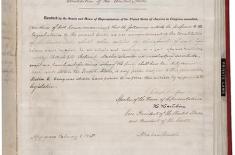
In the 1868 presidential election, Republican and Union General Ulysses S. Grant was elected to office. President Andrew Johnson, at the very end of his term in December 1868, granted a full pardon[1] to all “persons engaged in rebellion.” With this proclamation, former Confederates were granted the right to vote again. By 1870, all former Confederate states were readmitted to the Union. With this phase of Reconstruction complete, how would the newly reunited nation move forward?
Testing the 14th Amendment: The Slaughterhouse Cases 1873
In Louisiana, the 14th Amendment that granted equal protection of the law was put to an early test that had nothing to do with racial equality. Instead, it was related to slaughterhouses in New Orleans.
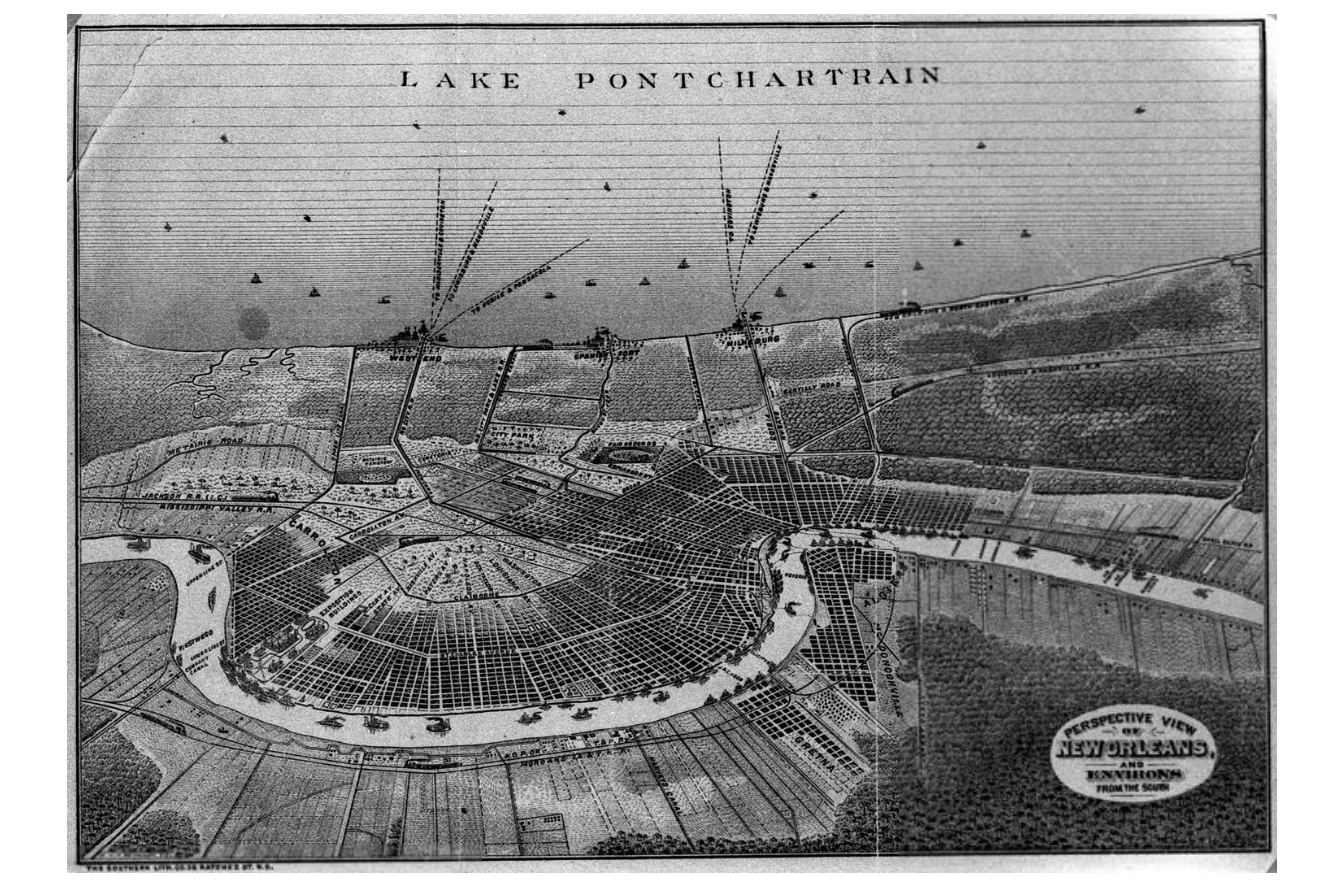
Henry W. W. Reynolds, “Perspective View of New Orleans
and Environs from the South,” 1884, The Historic New Orleans Collection
In 1869, the Louisiana Legislature passed an act[2] that required all livestock slaughtering to occur at a single place downriver of the city center[3]. The law also created a monopoly corporation to run the new slaughterhouse. This was an attempt to improve public health conditions. More than 150 slaughterhouses[4] were located throughout the city, and several were dumping their waste in the streets and the river. The law attempted to restrict the smells, sounds, and waste of slaughtering livestock to one location. All butchers[5] were ordered to use the new facility.
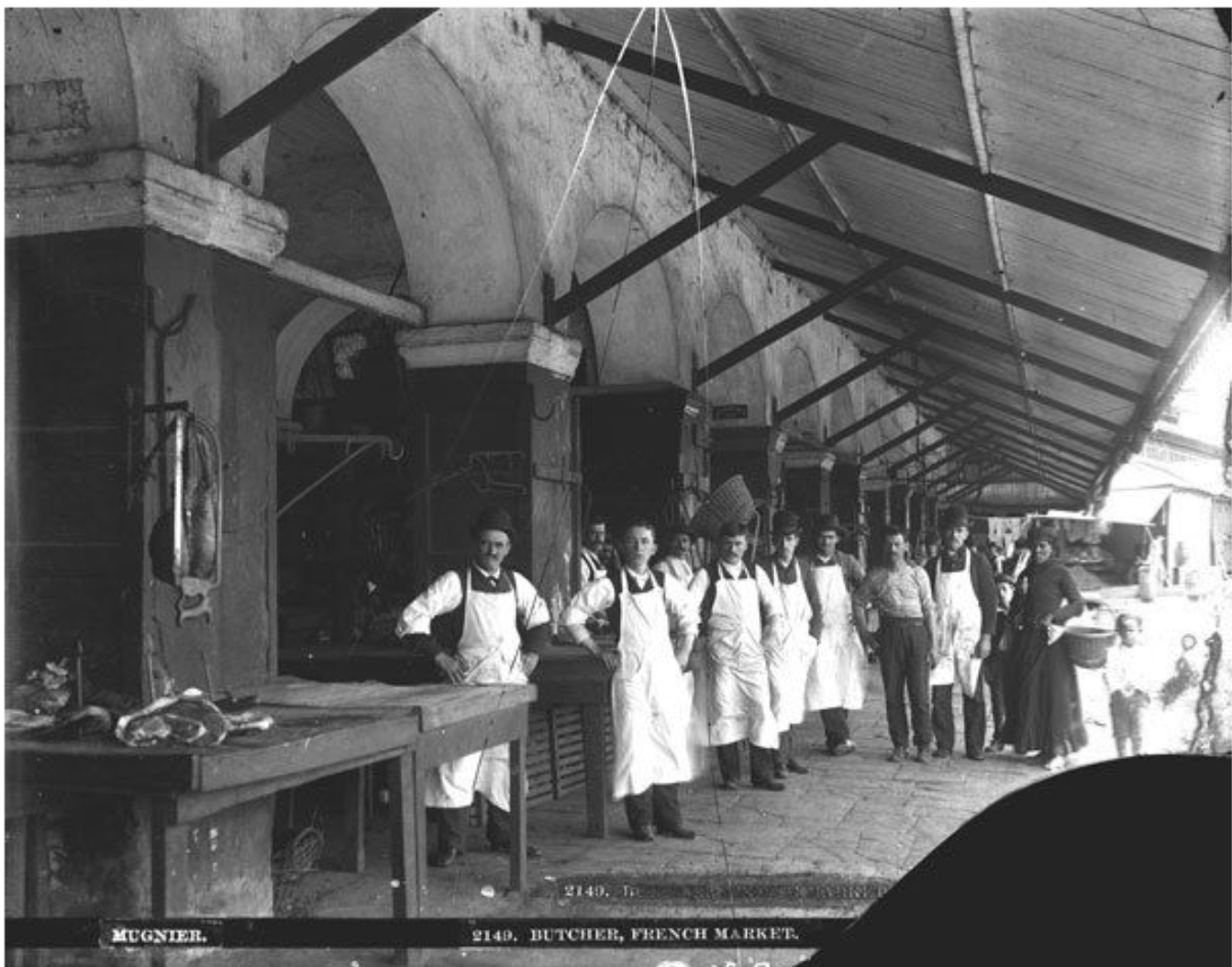
George François Mugnier, “Butcher, French Market,”
1880-1920, glass plate negative, Louisiana State Museum
Angered by the inconvenience and increased costs, butchers brought lawsuits against the new slaughterhouse monopoly. The butchers argued that the law violated their right to pursue their trade. Specifically, they claimed it violated the 14th Amendment by depriving them of liberty and property. They asserted that the new requirements for butchers denied them “equal protection of the laws.” They hoped the courts would decide that the slaughterhouse law illegally discriminated against butchers.
The courts did not agree. The Louisiana Supreme Court decided in favor of the new slaughterhouse company. Then, the butchers appealed to the U.S. Supreme Court. In a 5-4 decision[6], the Supreme Court decided that the protections of the 14th Amendment only applied to federal citizenship rights, not state citizenship rights. States had the power to regulate work—including butchery—within their borders, without interference from the federal government.
The 1873 Slaughterhouse Cases were the first time the US Supreme Court interpreted the 14th Amendment. Their decision set a precedent that the federal government had limited ability to enforce the amendment and granted more control to state governments. Eventually, this would open the door to racial segregation laws at the state and local level.
Political Violence and the Battle of Liberty Place
After Louisiana was readmitted to the Union and former Confederates regained the right to vote, many Southerners were eager to remove the racially integrated Republican government from power and return white Democrats to office. They turned to violence.
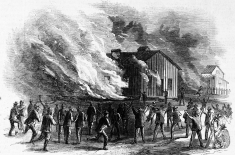
In the 1872 Louisiana governor’s race, white Democrats supported John McEnery. When Republican William Kellogg won the election[7], many Louisiana Democrats refused to accept the results[8]. In 1873, a group of white McEnery supporters attacked the racially integrated Metropolitan Police in New Orleans. They attempted to take over the Cabildo—which housed the police station and Louisiana Supreme Court—and the State Arsenal next door. They failed, but the attack[9] demonstrated that some white Democrats were willing to participate in armed rebellion against the Republican government.
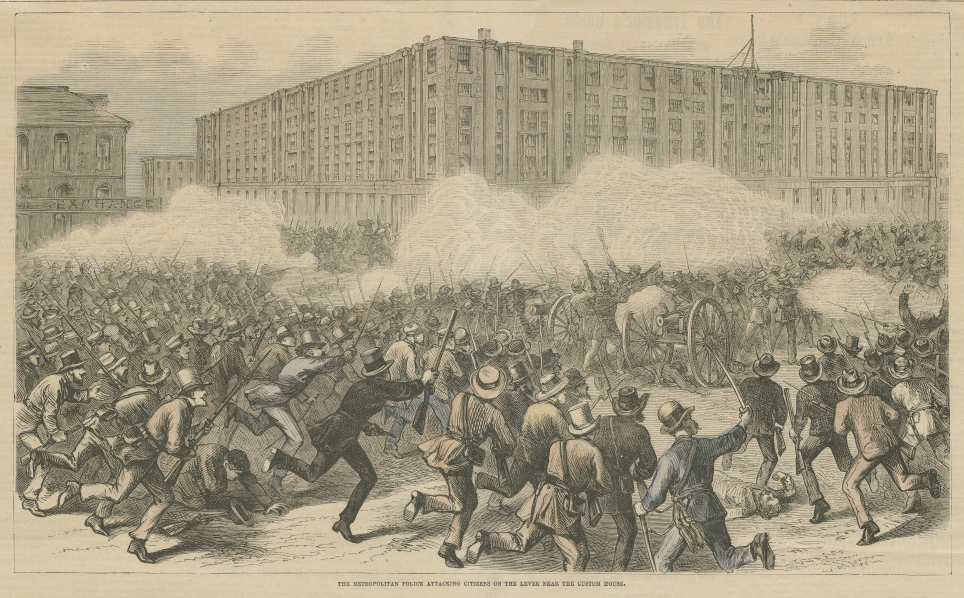
Detail of Aaron B. Thompson, “Revolution in New Orleans-Overthrow
of the Kellogg State Government of Louisiana,” Frank Leslie’s Illustrated
Newspaper, 1873-1874, Historic New Orleans Collection, Gift of Mr. George Denègre
White supremacists throughout the south banded together in armed groups. In New Orleans, a group called the Crescent City White League[10] tried to take over the government by force. In 1874, the White League[11] numbering 5,000 engaged in strategic armed battle against the Metropolitan Police[12] force of 600 men. They gathered at Canal Street and the levee, built barricades[13], and stationed snipers throughout downtown New Orleans. Both sides had cannons[14] and Civil War veterans[15] among their ranks. The White League forced the police into retreat and took control of the Cabildo and Arsenal. The White League attempted to instate a new government with McEnery as governor. President Ulysses S. Grant sent federal troops to force the White League to surrender and return control to Governor Kellogg.
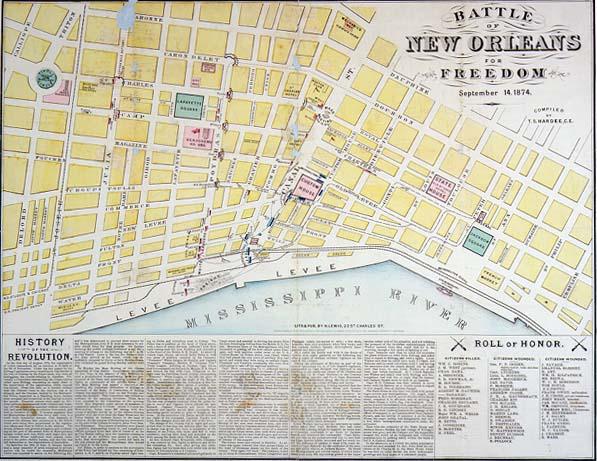
Thomas S. Hardee and H. Lewis, “Battle of New Orleans for Freedom,”
H. Lewis Publisher, (New Orleans, LA), Louisiana State Museum
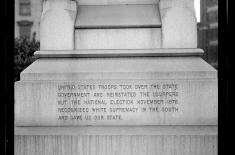
This event, known as the Battle of Liberty Place, emboldened white supremacists in Louisiana. They were straightforward about their desire for white political and social control over Black Americans. Many white people celebrated the White League as heroes in ceremonies, publications[16], and public monuments[17].
Federal Reconstruction ended a few years later. The racist attitudes displayed during and after the Battle of Liberty Place were a warning sign of the upcoming backlash[18] to the progressive changes of Reconstruction.
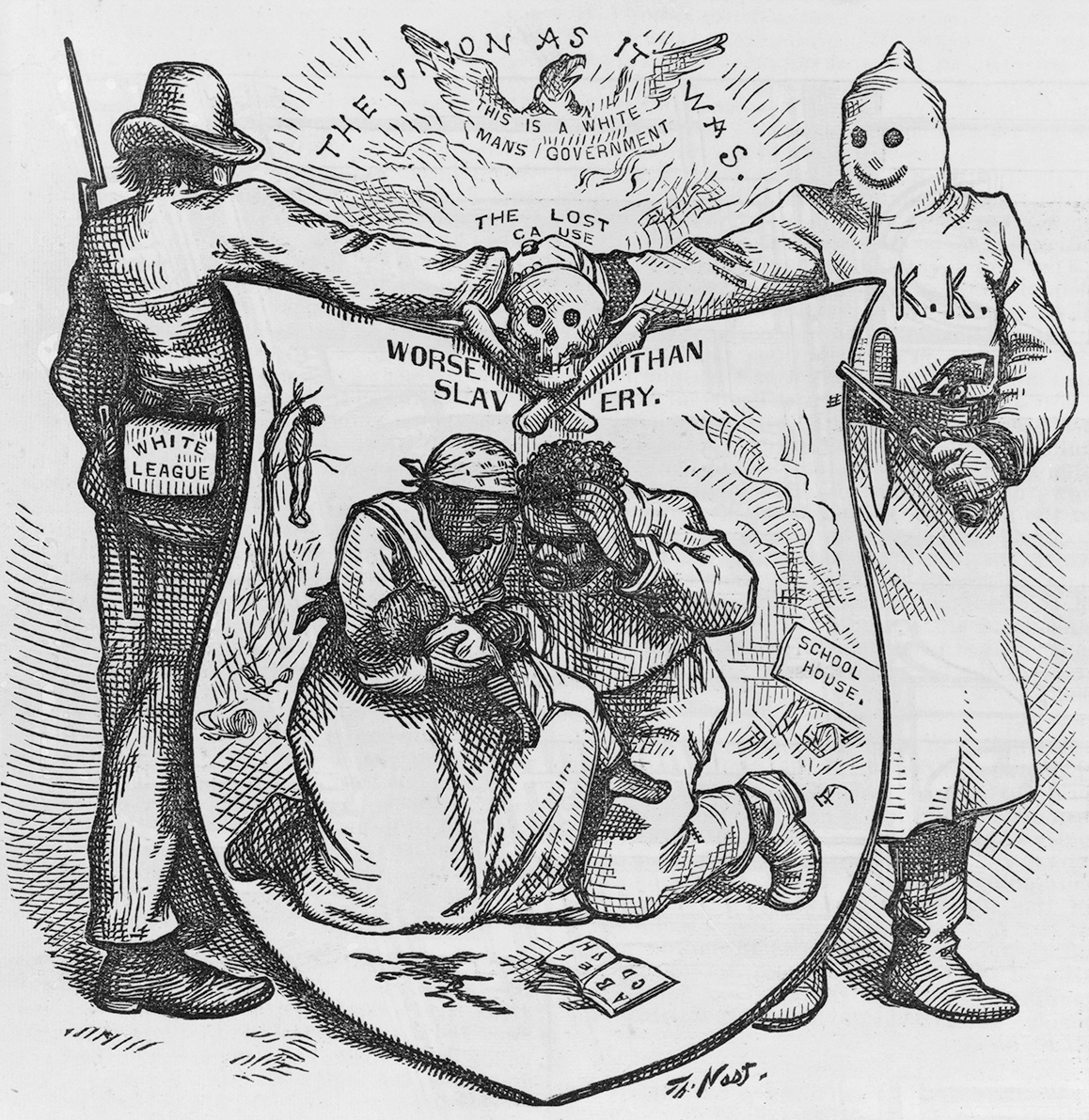
Thomas Nast, “The Union as it was The lost cause, worse than slavery,”
Harper’s Weekly, v. 18, no. 930, (1874 October 24), Library of Congress
Prints and Photographs Division




Late Reconstruction: Tested Amendments, Disputed Elections, and Continued Violence, 1870–1877

Funded by a grant from the Library of Congress Teaching with Primary Sources program. Content created and featured in partnership with the TPS program does not indicate an endorsement by the Library of Congress.